
Groundwater situation: Hampshire, 10 April 2026
Updated 10 April 2026

© Crown copyright 2026
This publication is licensed under the terms of the Open Government Licence v3.0 except where otherwise stated. To view this licence, visit nationalarchives.gov.uk/doc/open-government-licence/version/3 or write to the Information Policy Team, The National Archives, Kew, London TW9 4DU, or email: psi@nationalarchives.gov.uk.
Where we have identified any third party copyright information you will need to obtain permission from the copyright holders concerned.
This publication is available at /government/publications/hampshire-groundwater/groundwater-situation-hampshire
Current situation
2026 began with a lot of rain, with almost all rain gauges in Hampshire recording more than double the average rainfall expected across January and February. March 2026 was drier than normal and in April 2026, almost no rain has been recorded.
During January and February 2026, groundwater levels across Hampshire rose significantly and quickly, in response to the heavy rainfall. Groundwater levels across Hampshire peaked between late February and mid March and has been slowly falling since. Groundwater levels across Hampshire are still above average for this time of year.
Residual groundwater flooding impacts are likely to still be occurring in many communities in Hampshire.
Cellars of properties in Appleshaw, Hatherden, Hursley, Preston Candover, Old Alresford, and Cheriton may still have water in them, but these impacts will be slowly reducing.
Impacts to the sewerage system and septic tanks are still occurring in some communities and could continue for much of April in places.
No new groundwater flooding impacts are expected.
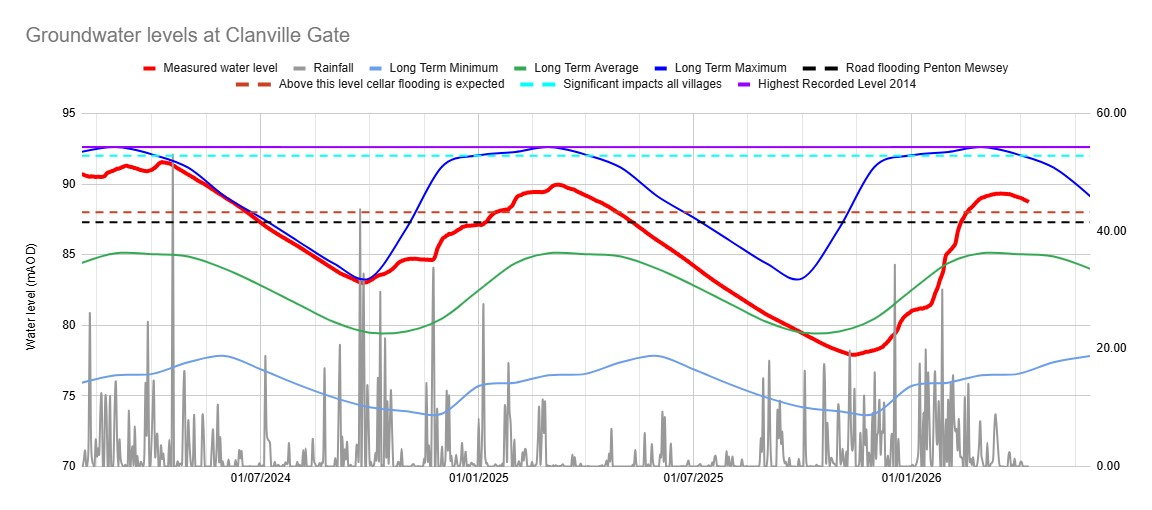
Graph showing changes in groundwater levels in Clanville Gate Borehole in North Hampshire from February 2024 to April 2026. The graph shows that groundwater levels are currently above average for the time of year but currently falling.
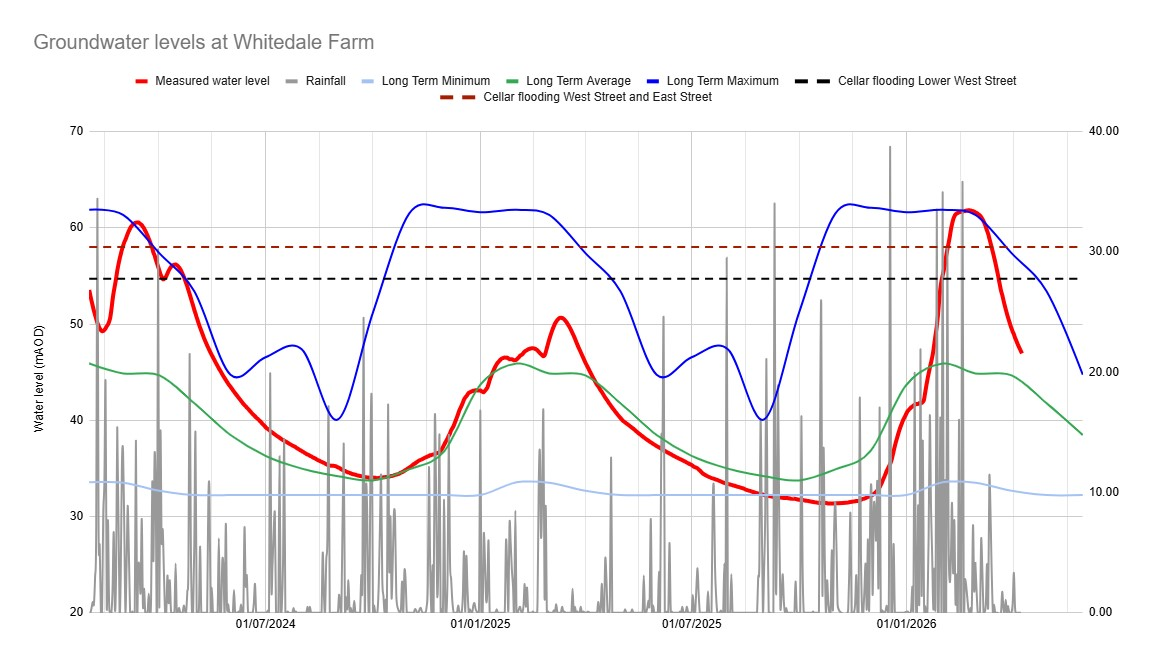
Graph showing changes in groundwater levels in Whitedale Farm Borehole in East Hampshire from February 2024 to April 2026. The graph shows that groundwater levels are currently above average for the time of year but currently falling.
Weather forecast
From Friday 10 April to Tuesday 14 April, weak frontal rain and light showers are forecast to affect Hampshire. However, less than 5mm of rain is expected on each day.
Long range forecasting is difficult. From mid April, unsettled weather is expected to affect the United Kingdom. This pattern is expected to continue into early May. However, in general, less rain is expected during spring than in winter.
Forecast risk of flooding
In most years, groundwater levels typically reach a peak in March or early April and then start to fall as winter rain eases, temperatures rise, and plants stat to grow and take up water. We expect groundwater levels across Hampshire to continue falling slowly and any residual flooding impacts wil decrease over the coming weeks.
Next update
We will update this groundwater situation document by Friday 18 December 2026, or sooner if the risk of flooding significantly increases.
When in force, groundwater flood alerts are updated with information more frequently.
What we are doing
We continue to monitor groundwater levels and their response to rainfall.
Throughout autumn and winter, we will update this groundwater situation and our groundwater briefing notes.
We will issue and update flood alerts when there is risk of flooding affecting property.
We liaise with the local authority and other responding partners to ensure they are aware of the situation.
Our operational staff will remove blockages from main rivers, to ensure they flow freely.
Actions and advice
Think and prepare now for what you’ll do if flooding occurs where you live, don’t wait until flooding happens.
Call Floodline on 0345 988 118 or visit check for flooding to find out if you can register to receive free flood alerts for flooding from groundwater.
Look for data in your area:
There is practical advice on what to do before, during and after groundwater flooding, and further guidance about groundwater flooding, how it might affect you and what to do.
Prepare a personal flood plan or community flood plan to help you and your community decide what practical actions to take before and during a flood, which will help reduce the damage flooding could cause.
Check pumps and any other flood protection equipment you have. Ensure valuables are moved from basements and other low parts of properties.
Where safe to do so, communities may wish to check and ensure there are no blockages in local watercourses and ditches.
Further information
You can view:
- daily groundwater levels compared to average and maximum, with indicative impact thresholds
- sub daily groundwater levels on Gaugemap
- the latest flood alert information
- water situation reports
More detailed groundwater briefing notes are emailed as part of the flood alert service. See contacts section below to register your email address.
Contacts
For more information on the flood alert service and to find out what messages you are registered to receive, call Floodline on 0345 988 118.
Alternatively, you can contact the following for additional information:
- Environment Agency Customers and Engagement: ssdenquiries@environment-agency.gov.uk
- Environment Agency Incident Reporting Hotline: 0800 807060
- Environment Agency National Customer Contact Centre: 03708 506 506