Qualitative assessment of the risk that Zika virus presents to the UK population
Updated 13 April 2026

© Crown copyright 2026
This publication is licensed under the terms of the Open Government Licence v3.0 except where otherwise stated. To view this licence, visit nationalarchives.gov.uk/doc/open-government-licence/version/3 or write to the Information Policy Team, The National Archives, Kew, London TW9 4DU, or email: psi@nationalarchives.gov.uk.
Where we have identified any third party copyright information you will need to obtain permission from the copyright holders concerned.
This publication is available at /government/publications/hairs-risk-assessment-zika-virus/qualitative-assessment-of-the-risk-that-zika-virus-presents-to-the-uk-population
About the Human Animal Infections and Risk Surveillance (HAIRS) group
This document was prepared by the UK Health Security Agency (UKHSA) on behalf of the joint Human Animal Infections and Risk Surveillance (HAIRS) group.
HAIRS is a multi-agency cross-government horizon scanning and risk assessment group, which acts as a forum to identify and discuss infections with potential for interspecies transfer (particularly zoonotic infections). Its work cuts across several organisations, including:
- UKHSA
- Department for Environment, Food and Rural Affairs (Defra)
- Department for Health and Social Care (DHSC)
- Animal and Plant Health Agency (APHA)
- Food Standards Agency (FSA)
- Food Standards Scotland (FSS)
- Public Health Wales (PHW)
- Public Health Scotland (PHS)
- Department of Agriculture, Environment and Rural Affairs for Northern Ireland (DAERA)
- Welsh Government
- Scottish Government
- Public Health Agency of Northern Ireland
- Department of Agriculture, Food and the Marine, Republic of Ireland
- Health Service Executive, Republic of Ireland
- Infrastructure, Housing and Environment, Government of Jersey
- Isle of Man Government
- States Veterinary Officer, Bailiwick of Guernsey
Information on the risk assessment processes used by the HAIRS group can be found at HAIRS risk assessment process.
Version control
Date of this assessment: March 2026
Version: 6.0
Reason for the assessment: Updated to reflect the latest epidemiological and entomological data.
Completed by: HAIRS scientific secretariat and members.
Non-HAIRS group experts consulted: UKHSA Travel Health Team.
Date of previous risk assessments: March 2006, October 2015, February 2016, February 2017, September 2017.
Information on the risk assessment processes used by the HAIRS group can be found online.
For queries relating to this document, contact: HAIRS@ukhsa.gov.uk
Summary of risk assessment for Zika virus in the UK population
Zika virus disease is a mosquito-borne infection caused by Zika virus (ZIKV), which is transmitted via the bite of Aedes mosquitoes. It was first isolated from a sentinel rhesus monkey in Uganda in 1947 and has circulated since then in many countries. Outbreaks outside Africa and Asia have been reported in parts of the Pacific region in 2007 and 2013. Cases occurred on Easter Island in February 2014, and in May 2015 the first locally acquired cases of ZIKV were confirmed in Brazil. Since then, the geographical range of ZIKV has expanded to many countries in North, South and Central America, the Caribbean, Oceania (Melanesia, Micronesia and Polynesia), Asia and Africa.
ZIKV generally causes a mild infection. The Brazilian Ministry of Health initially proposed a link between ZIKV infection and an unusual increase in microcephaly in November 2015 [1]. Based on a systematic review of the literature up to 30 May 2016 [2], the World Health Organization (WHO) concluded that ZIKV infection during pregnancy is a cause of congenital brain abnormalities, including microcephaly (also referred to as congenital ZIKV syndrome) and that ZIKV is a trigger of Guillain-Barré syndrome.
In the UK, reported cases have been associated with travel to areas with active ZIKV transmission [3]. As the UK lacks established populations of invasive Aedes mosquito species which are considered the primary vector of ZIKV, such as Aedes albopictus which has been implicated in local ZIKV transmission in the European Region, no locally acquired cases because of vector borne transmission have been reported in the UK. Congenital ZIKV transmission in an infant born to a mother who had travelled to a ZIKV affected area (Thailand) has been documented in the UK [4]. This was the first – and remains the only – case of congenital Zika syndrome diagnosed antenatally in the UK.
In September 2016 and July 2017, a small number of Aedes mosquito eggs and larvae were detected in 2 locations in Kent. Detections of Aedes albopictus were since made in 2018, 3 times in 2019 and in both 2024 and 2025. Aedes aegypti were detected in 2023 and 2025. So far, there is no evidence that either species has established in the UK. There continues to be routes of importation for these mosquitoes, for example through seaports and airports, and local climate could support the establishment of Aedes albopictus. The current spread of these competent Aedes albopictus vectors elsewhere in Europe (particularly through France) is rapid, with new regions colonised each year. When environmental conditions are favourable in areas where Aedes albopictus is established, viraemic travel-related cases may generate local transmission of ZIKV.
There is good evidence that the intensity of ZIKV transmission has decreased in most affected countries in the Americas, compared to the situation at the peak of the outbreak in 2016, and that there is little or limited transmission of ZIKV in Europe which is in contrast to other vector borne diseases, such as dengue and chikungunya. While some cases will continue to be reported, the risk of infection for UK travellers has therefore reduced considerably in most of these countries. This risk assessment was completed to assess the current risk that ZIKV presents to the UK population from exposure to infected vectors within the UK. The reader is reminded that this assessment is not considering the human-to-human transmission routes via sexual or vertical transmission.
Assessment of the risk of infection in the UK
Given the absence of competent ZIKV vectors, the probability of locally acquired human infection with ZIKV in the UK is considered, at most, Very low.
The impact of ZIKV on human health, as a result of vector-mediated transmission, in the UK is considered Very low for the general UK population.
Level of confidence in assessment of risk
Good
Current evidence gaps
There is uncertainty about:
- the long-term health outcomes of ZIKV infection, particularly understanding the risks associated with the development of children infected before or after birth
- the difference in disease infectivity and severity for different transmission pathways of ZIKV, including the implication of these different pathways during pregnancy
- the potential role of Aedes vexans as a competent vector, and the introduction and establishment of Aedes albopictus in the UK
Actions and recommendations
Although it has been determined that ZIKV currently presents a very low risk to the UK population, the extent of the epidemic has reinforced the need for a UK-wide contingency plan for the management of human and animal cases of vector borne diseases. The development of a coordinated response plan is ongoing. It covers the early detection and control of invasive mosquitoes, ensuring all available controls are obtainable for use, in addition to several aspects of human health including case finding, public engagement, and health service response.
For UK residents travelling to areas with risk of ZIKV transmission, the HAIRS group supports the advice already provided by the respective health and travel authorities:
- UK Health Security Agency
- Public Health Wales
- Public Health Scotland
- Public Health Agency of Northern Ireland
- National Travel Health Network and Centre (NaTHNaC)/Travel Health Pro
New evidence should continue to be monitored and reviewed closely, particularly developments in Northern Europe.
Vectors may not always be present but at times that they are, a response will have to be made – these responses will not be necessary all year round.
For animal health and veterinary professionals
The guidance is to:
- continue to use a One Health approach to surveillance for potential vectors, working closely across veterinary and public health departments
For public health professionals
The guidance is:
- early detection and eradication or control of mosquitoes – a cross-agency contingency plan is being developed
- in the event that competent mosquito species become established, each imported case in that area would need to be followed up with local mosquito control, as currently occurs in Europe
For both public health and animal health professionals
The guidance is to:
- continue to monitor and review new evidence as it becomes available
- deliver communication regarding vigilance and proportionate avoidance strategies for all mosquito species
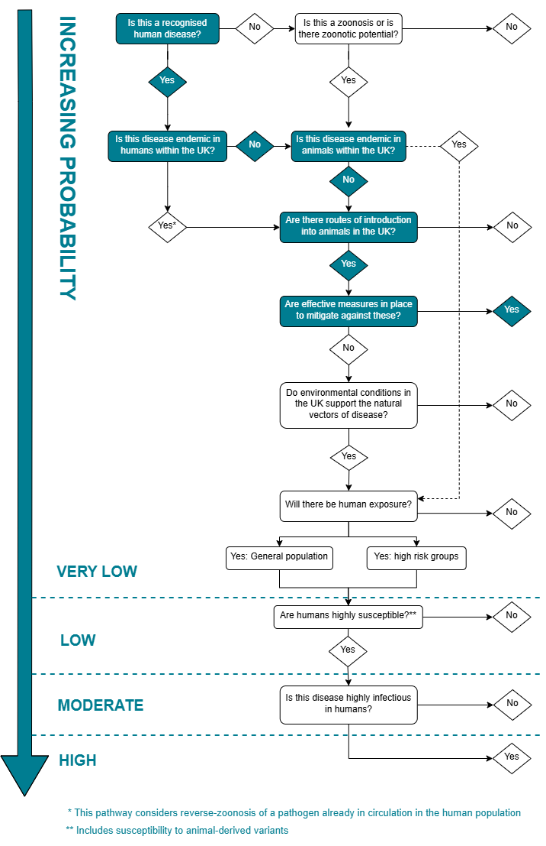
Step 1. Assessment of the probability of infection in the UK human population
This section of the assessment examines the likelihood of an infectious threat causing infection in the UK human population. Where a new agent is identified there may be insufficient information to carry out a risk assessment and this should be clearly documented. Read in conjunction with the Probability Algorithm found at Annexe A.
Is this a recognised human disease?
Outcome: Yes
Quality of evidence: Good
Zika virus disease is a mosquito-borne infection caused by Zika virus (ZIKV), a member of the genus flavivirus and family Flaviviridae [5], [6]. There are 2 main lineages, the African and the Asian lineage [7 to 9]. ZIKV is transmitted by Aedes mosquitoes, principally Aedes aegypti. The incubation period ranges from 3 to 12 days, with infection reported to be asymptomatic in most cases (60 to 80%). In symptomatic cases, illness is generally mild and self-limiting, lasting between 2 and 7 days. Symptoms of ZIKV infection are similar to, but usually milder than, dengue or chikungunya virus infections and may include rash, itching or pruritus, fever, headache, joint and muscle pain, conjunctivitis, lower back pain and pain behind the eyes [10 to 12]. Severe disease requiring hospitalisation is uncommon. Deaths associated with ZIKV are very rarely reported and mostly associated with underlying conditions [11, 13].
Serious complications from ZIKV are not common. However, based on a systematic review of the literature up to 30 May 2016, WHO concluded [14] that ZIKV is a cause of microcephaly and other congenital anomalies (also referred to as congenital Zika virus syndrome [15], and Guillain-Barré syndrome. An array of other neurological presentations and complications, such as neuropathy and myelitis, have also been reported ([16], [17]).
Acute infection with ZIKV can be confirmed by RT-PCR. Serological testing can also be used but cross-reaction with related flaviviruses (for example, dengue) can impact sensitivity and specificity [18]. No specific anti-viral treatment or vaccine is available.
In 2007, an epidemic occurred in Micronesia (Yap Islands in the Pacific Ocean), causing 5,000 infections [10]. Outbreaks were notified in several islands of the Pacific region in 2013 and 2014 with 8,750 suspected cases in French Polynesia [19] and further spread to New Caledonia, the Cook Islands and later Easter Island (Chile) [20], [21]. Cases of ZIKV infection were reported in Brazil from February 2015 onwards and autochthonous transmission was confirmed in May 2015. Intense transmission in many countries and territories in south and central America and the Caribbean followed [22]. The circulating virus strain is of the Asian lineage. In most countries the intensity of transmission has decreased since 2017 [23]. In 2025, up to 29 November, 25,905 cases have been reported in the Americas region, of which most cases have been in Brazil (23,595 cases), Bolivia (1,082 cases) and Argentina (1,045 cases) [24].
In the European region, 28 locally acquired cases of ZIKV infection have been reported since 2016, as of 27 January 2024 [25]. Of these, 21 cases were acquired through sexual transmission from returning travellers to their partners, one case was recorded through transmission from mother to child, while the transmission status of 3 cases were unknown. In 2019, France reported a cluster of 3 locally acquired cases of ZIKV in Var Department (southern France). These were the first reported vector-borne transmitted autochthonous cases of ZIKV in the European Region. However, since 2019, no further autochthonous cases of ZIKV infection have been reported in the Region [26].
Is the disease endemic in humans within the UK?
Outcome: No
Quality of evidence: Good
ZIKV is not endemic in the UK. Reported cases in the UK have been associated with travel to areas with active ZIKV transmission (see Table 1). In 2023, one case of congenital ZIKV syndrome was reported for the first time in the UK, which was linked to a travel history to Thailand. This is the only antenatally diagnosed case of congenital ZIKV syndrome reported to date in the UK [4].
Sexual transmission of infection is very rare and has only been documented once in the UK in 2016. The case was infected by their partner who had recent travel history to an area where ZIKV was circulating [27].
No cases of infection as a result of vector-borne transmission have been reported in the UK – this is not surprising given there are no established populations of high competency vectors.
Table 1. The number of travel-associated Zika virus disease cases reported in England, Wales and Northern Ireland between 2020 and 2024, by country of travel [note 1]
| Country of travel | 2020 | 2021 | 2022 | 2023 | 2024 | Total |
|---|---|---|---|---|---|---|
| Thailand | 1 | 5 | 3 | 6 | 15 | |
| India | 1 | 1 | 4 | 6 | ||
| Vietnam | 1 | 1 | 1 | 3 | ||
| Singapore | 1 | 2 | 3 | |||
| Philippines | 1 | 1 | 2 | |||
| Sri Lanka | 1 | 1 | 2 | |||
| Seychelles | 2 | 2 | ||||
| Malaysia | 1 | 1 | ||||
| Ghana | 1 | 1 | ||||
| Maldives | 1 | 1 | ||||
| Barbados | 1 | 1 | ||||
| Kenya | 1 | 1 | ||||
| Indonesia | 1 | 1 | ||||
| Cambodia | 1 | 1 | ||||
| Not stated | 1 | 1 | 2 | |||
| Total | 1 | 1 | 11 | 9 | 20 | 42 |
Note 1: some cases may have travelled to more than one country, and thus may be included more than once across country counts
Is the disease endemic in animals within the UK?
Outcome: No
Quality of evidence: Good
There is no current evidence of local transmission of ZIKV in the UK. There are no natural reservoirs or enzootic transmission of ZIKV in the UK due to a lack of competent mosquito vectors and an unsuitable climate.
Are there routes of introduction into the UK?
Outcome: Yes
Quality of evidence: Good
Introduction could occur via imported infected mosquitoes or viraemic individuals. However, significant onward transmission of ZIKV in the UK is contingent on the presence of competent mosquito vectors. While there are native populations of Aedes spp. in the UK, there is not enough evidence supporting their competence for ZIKV transmission. No established populations of invasive Aedes (Stegomyia) spp. are present in the UK.
Coinciding with the international outbreaks, an increase in travel-associated cases of ZIKV infection diagnosed in the UK was observed in 2015, peaking in 2016 and eventually declining by 2017, in line with the international trend in ZIKV transmission, particularly in the Americas [28 to 30]. Although sexual transmission of ZIKV infection has also occurred in the UK, it is very rarely reported (a single case to date [27]). In 2024, 16 ZIKV infection cases were reported in England, Wales and Northern Ireland, all of which were travel associated [3]. Most cases had a history of travel to South-Eastern Asia (56%).
There is no evidence to suggest that ZIKV would infect animals in the UK. Although other species cannot be ruled out, non-human primates are the only known reservoir for ZIKV.
The main vector responsible for transmission of ZIKV is Aedes aegypti, which, in Europe, is only present around the Black Sea coast in Russia, Georgia and Turkey as well as the islands of Madeira and Cyprus [31], but its distribution in the Mediterranean is expanding. Although not considered a primary vector, Aedes albopictus can also behave as a vector for ZIKV and is likely established across southern parts of Europe including regions across Austria, Belgium, Bulgaria, Croatia, Cyprus, France, Germany, Greece, Hungary, Italy, Malta, Portugal, Romania, Slovakia, Slovenia, and Spain, with expansions into northern parts of France and recurrent detections in the Netherlands [31]. Three locally acquired cases of ZIKV infection reported in Var Department, France, were associated with transmission by local Aedes albopictus mosquitoes, a species that is well established in southern France [32]. These cases represent the first report of vector-borne transmission of ZIKV by Aedes albopictus in the European Region.
Active surveillance programmes for invasive mosquitoes are run by UKHSA entomologists in collaboration with Port Health authorities, local authorities and APHA inspectors [33, 34]. To date, there have been no reports of either Aedes aegypti or Aedes albopictus becoming established in the UK. However, sporadic introductions have recently been detected. The first detection of Ae. albopictus eggs occurred in 2016 in Kent [35], and an unusual finding of a male Aedes aegypti in Merseyside was reported in early 2017 [36]. Both findings were followed up, and in both instances, no further mosquitoes were found. Since then, Aedes albopictus has been detected on 8 occasions including in 2024 and 2025, and Aedes aegypti has been detected at Heathrow airport, imported by aeroplanes, in both 2023 and 2025.
A study by Gendernalik and others found evidence of Aedes vexans, a species native to the UK, to be vector competent for ZIKV (80% infection rate), albeit with a low transmission potential (5%) [37], with similar findings reported by O’Donnell and others [38] and Elizondo-Quiroga and others [39]. It should be noted there is no evidence of transmission in the field by this species. In July 2017, host-seeking female Aedes vexans were identified in a residential area in Norwich [40]. Although occasionally observed in the past, this was the first notable population of Aedes vexans identified in the UK (Norwich) for 90 years. Additional surveillance in Gamston, Nottinghamshire also found a significant population of Aedes vexans in 2017 [41, 42], which has been subsequently monitored and the subject of local authority and community led control programmes, supported by UKHSA entomologists. The current scarce distribution of this species in the UK makes widespread transmission of ZIKV by this species unlikely, particularly given that its distribution in the rest of Europe has not been linked to ZIKV transmission. Aedes vexans is generally a rural mosquito and is unlikely to become established within urban centres. However, there is a possibility that limited local transmission could occur in hotspots under appropriate conditions: the presence of Aedes vexans, appropriate environmental conditions and the presence of a ZIKV positive individual returning from an area where ZIKV is known to circulate [43]. Current literature has shown that Aedes detritus, another species found in the UK, is not a competent vector of ZIKV [44].
The main route of transmission of ZIKV is through a mosquito vector, and person-to-person transmission has not been widely reported. However, mother-to-child transmission can occur, most probably transplacentally or during delivery of a viraemic mother [45]. The virus has been shown to persist in semen for prolonged periods [46, 47] and has also been found in the female genital tract [48 to 51]. Sexual transmission of ZIKV has been reported, mostly male-to-female but with some reports of male-to-male and female-to-male transmission. To date, the only reported occurrence of sexual transmission in the UK was a male-to-female transmission in 2016 [27].
During the 2013 ZIKV outbreak in French Polynesia, 3% of blood donations were found to contain ZIKV by PCR [52], and thus transmission would be expected to occur via this route. A small number of cases of transfusion transmission have subsequently been reported outside Europe [53, 54].
Are effective measures in place to mitigate against routes of vector introduction?
Outcome: Yes
Quality of evidence: Good
Should the vector be found in the UK, a combination of source reduction to reduce aquatic habitat and control (adulticides and larvicides) would need to be implemented to reduce or eradicate the population. Deltamethrin adulticide is licenced for use in the UK but is considered a last resort.
A UK-wide contingency plan for invasive mosquito control is being developed. In the event of established competent mosquitoes, there may also be a requirement for case finding and local mosquito control in the vicinity of imported human cases of ZIKV (and other vector-borne diseases).
In the UK since mid-2015, there has been a deferral of blood donors for 4 weeks for those who have visited countries under the tropical virus deferral guidelines, and for 6 months under current malaria deferral guidelines if the affected area also has a malaria risk. The tropical deferral guidelines also now specifically include countries with high or moderate risk of ZIKV transmission. Any donors with confirmed or compatible symptoms indicating chikungunya, dengue or ZIKV infection after returning from a ‘Tropical Virus Risk’ country cannot donate blood or tissues for 6 months from their return to the UK [55].
Whilst there are no measures in place to prevent potentially ZIKV infected humans travelling to the UK, the risk of infection in travellers can be reduced through raising awareness on mosquito bite prevention (such as using mosquito repellents, wearing long-sleeved clothing and trousers and sleeping under mosquito nets). Upon clinical suspicion, rapid diagnostic testing and management of symptoms are available in the UK for individuals who present with symptoms compatible with ZIKV infection and have recently returned from a country where ZIKV is known to circulate.
Advice for UK travellers to reduce the risk of sexual transmission has been in place since January 2016 [56].
Outcome of probability assessment
Given the absence of competent ZIKV vectors, the probability of locally acquired human infection with ZIKV in the UK is considered, at most, very low.
Step 2: Assessment of the impact on human health
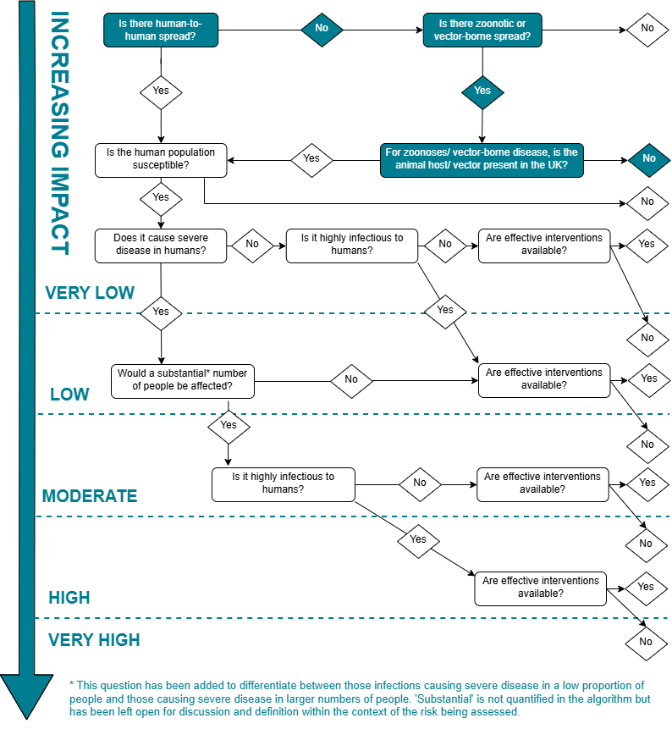
The scale of harm caused by the infectious threat in terms of morbidity and mortality: this depends on spread, severity, availability of interventions and context. Read in conjunction with the Impact Algorithm found at Annexe B.
Is there human-to-human spread of this pathogen?
Outcome: No
Quality of evidence: Satisfactory
The overwhelming majority of ZIKV cases are vector-borne. Human-to-human transmission, for example from mother-to-child during pregnancy or sexual transmission can occur, but these transmission routes are not implicated in sustained human-to-human transmission of the virus.
The virus has been shown to persist in semen for prolonged periods [46, 47]. ZIKV has also been found in the female genital tract [48 to 51]. A relatively small number of cases of sexual transmission of ZIKV have been reported, which have been mainly male-to-female. Limited reports of male-to-male and female-to-male transmission have also been reported.
Spread of ZIKV infection through transfusion or transplantation is not believed to play a major role in ZIKV transmission, although 3% of blood donors in French Polynesia, asymptomatic at the time of blood donation, were PCR positive for ZIKV, supporting a potential risk of transfusion-derived transmission [52, 57]. Transmission via blood products has been demonstrated [53, 54].
Is there zoonotic or vector borne spread of this pathogen?
Outcome: Yes
Quality of evidence: Good
ZIKV is vector-borne, primarily via Aedes aegypti and Aedes Albopictus.
For zoonoses or vector-borne disease, is the animal host or vector present in the UK?
Outcome: No
Quality of evidence: Good
Although there is evidence of sporadic introductions of invasive Aedes mosquitoes into the UK, there has been no evidence of establishment of either species.
The first detection of Aedes albopictus eggs was made in 2016 in Kent and an unusual finding of a male Aedes aegypti in Merseyside was reported in early 2017. Since then, Aedes albopictus has been detected on 8 occasions, most recently in 2024 and 2025, and Aedes aegypti was recently detected in 2023 and 2025.
Outcome of impact assessment
The impact of ZIKV on human health, as a result of vector-mediated transmission, in the UK is considered very low for the general UK population.
Annexe A
Figure 1. Assessment of the probability of infection in the UK population algorithm
Annexe B
Accessible text version of Figure 1. Assessment of the probability of infection in the UK population algorithm
Outcomes are specified by a ☑ (tick) beside the appropriate answer. Where the evidence may be insufficient to give a definitive answer to a question, the alternative is also considered with the most likely outcome shown with ☑☑ (2 ticks) and/or the alternative outcome(s) with a ☑ (tick).
Outcomes are specified by a ☑ (tick) beside the appropriate answer.
Question 1: Is this a recognised human disease?
Yes: go to question 3. ☑
No: go to question 2.
Question 2: Is this a zoonosis or is there a zoonotic potential?
Yes: go to question 4.
No: the probability of infection in the UK population is considered very low.
Question 3: Is this disease endemic in humans within the UK?
Yes [note 2]: go to question 5.
No: go to question 4. ☑
Note 2: This pathway considers reverse-zoonosis of a pathogen already in circulation in the human population.
Question 4: Is this disease endemic in animals in the UK?
Yes: go to question 8.
No: go to question 5. ☑
Question 5: Are there routes of introduction into animals in the UK?
Yes: go to question 6. ☑
No: the probability of infection in the UK population is considered very low.
Question 6: Are effective measures in place to mitigate against these?
Yes: the probability of infection in the UK population is considered very low. ☑
No: go to question 7.
Question 7: Do environmental conditions in the UK support the natural vectors of disease?
Yes: go to question 8.
No: the probability of infection in the UK population is considered very low.
Question 8: Will there be human exposure?
Yes: go to question 9.
No: the probability of infection in the general UK population is considered very low.
Question 9: Are humans highly susceptible? [note 3]
Yes: go to question 10.
No: the probability of infection in the UK population is considered low.
Note 3: Includes susceptibility to animal-derived variants
Question 10: Is the disease highly infectious in humans?
Yes: the probability of infection in the UK population is considered high.
No. the probability of infection in the UK population is considered moderate.
Annexe C
Figure 2. Assessment of the impact on human health algorithm
Annexe D
Accessible text version of Figure 2. Assessment of the impact on human health algorithm
Outcomes are specified by a ☑ (tick) beside the appropriate answer.
Question 1: Is there human-to-human spread?
Yes: go to question 4.
No. go to question 2. ☑
Question 2: Is there zoonotic or vector-borne spread?
Yes: go to question 3. ☑
No: the impact of infection in the UK population is considered very low.
Question 3: For zoonoses or vector-borne disease, is the animal host or vector present in the UK?
Yes: go to question 4.
No: the impact of infection in the UK population is considered very low. ☑
Question 4: Is the human population susceptible?
Yes: go to question 5.
No: the impact of infection in the UK population is considered very low.
Question 5: Does it cause severe disease in humans?
Yes, high risk groups: go to question 8.
No: go to question 6.
Question 6: Is it highly infectious to humans?
Yes: go to question 9.
No: Go to question 7.
Question 7: Are effective interventions available?
Yes: the impact of infection in the UK population is considered very low.
No: the impact of infection in the UK population is considered low.
Question 8: Would a substantial [note 4] number of people be affected?
Yes: go to question 10.
No: go to question 9.
Note 4: This question has been added to differentiate between those infections causing severe disease in a handful of people and those causing severe disease in larger numbers of people. ‘Substantial is not quantified in the algorithm but has been left open for discussion and definition within the context of the risk being assessed.
Question 9: Are effective interventions available?
Yes: the impact of infection in the UK population is considered low.
No: the impact of infection in the UK population is considered moderate.
Question 10: Is it highly infectious to humans?
Yes: go to question 12.
No: go to question 11.
Question 11: Are effective interventions available?
Yes: the impact of infection in the UK population is considered moderate.
No: the impact of infection in the UK population is considered high.
Question 12: Are effective interventions available?
Yes: the impact of infection in the UK population is considered high.
No: the impact of infection in the UK population is considered very high.
References
1. Brazilian Ministry of Health. ‘Ministry of Health releases new microcephaly data’ 2015
2. WHO Africa Region. Zika Virus 2026
3. UKHSA. ‘Travel-associated infections in England, Wales and Northern Ireland: 2024’ UKHSA 2024
4. UKHSA. ‘Travel-associated infections in England, Wales and Northern Ireland: 2023’ UKHSA 2023
5. Dick GW, Kitchen SF, Haddow AJ. ‘Zika virus. I. Isolations and serological specificity’ Transactions of the Royal Society of Tropical Medicine and Hygiene 1952: volume 46, issue 5, pages 509-20
6. Simpson DI. ‘Zika Virus Infection in Man’ Transactions of the Royal Society of Tropical Medicine and Hygiene 1964: volume 58, pages 335-8
7. Kuno G, Chang GJ, Tsuchiya KR, Karabatsos N, Cropp CB. ‘Phylogeny of the genus Flavivirus’ Journal of Virology 1998: volume 72, issue 1, pages 73-83
8. Haddow AD, Schuh AJ, Yasuda CY, Kasper MR, Heang V, Huy R and others. ‘Genetic characterization of Zika virus strains: geographic expansion of the Asian lineage’ PLoS Neglected Tropical Diseases 2012: volume 6, issue 2, e1477
9. Faye O, Freire CC, Iamarino A, Faye O, de Oliveira JV, Diallo M and others. ‘Molecular evolution of Zika virus during its emergence in the 20(th) century’ PLoS Neglected Tropical Diseases 2014: volume 8, issue 1, e2636
10. Duffy MR, Chen TH, Hancock WT, Powers AM, Kool JL, Lanciotti RS and others. ‘Zika virus outbreak on Yap Island, Federated States of Micronesia’ New England Journal of Medicine 2009: volume 360, issue 24, pages 2,536-43
11. European Centre for Disease Prevention and Control (ECDC). Zika virus infection: Factsheet for health professionals viewed on 27 January 2017. Version: 23 June 2016
12. Brasil P, Calvet GA, Siqueira AM, Wakimoto M, de Sequeira PC, Nobre A and others. ‘Zika Virus Outbreak in Rio de Janeiro, Brazil: Clinical Characterization, Epidemiological and Virological Aspects’ PLoS Neglected Tropical Diseases 2016: volume 10, issue 4, e0004636
13. Arzuza-Ortega L, Polo A, Perez-Tatis G, Lopez-Garcia H, Parra E, Pardo-Herrera LC and others. ‘Fatal Sickle Cell Disease and Zika Virus Infection in Girl from Colombia’ Emerging Infectious Diseases 2016: volume 22, issue 5, pages 925-7
14. WHO. Zika causality statement 2016
15. Costello A, Dua T, Duran P, Gulmezoglu M, Oladapo OT, Perea W and others. ‘Defining the syndrome associated with congenital Zika virus infection’ Bulletin of the World Health Organization 2016: volume 94, issue 6, page 406-A
16. WHO. Zika virus fact sheet 2025
17. da Silva IRF, Frontera JA, de Filippis AMB, do Nascimento OJM, RIO-GBS-ZIKV Research Group. ‘Neurologic Complications Associated With the Zika Virus in Brazilian Adults’ JAMA Neurology 2017: volume 74, issue 10, pages 1,190-8
18. UKHSA. ‘Zika virus: sample testing advice’ 2019
19. Mallet HP, Vial AL, Musso D. Bilan de l’epidemie a virus Zika en Polynesue Francaise, 2013-2014 2015 (viewed on 27 January 2017)
20. Roth A, Mercier A, Lepers C, Hoy D, Duituturaga S, Benyon E and others. ‘Concurrent outbreaks of dengue, chikungunya and Zika virus infections – an unprecedented epidemic wave of mosquito-borne viruses in the Pacific 2012-2014’ Euro Surveillance 2014: volume 19, issue 41
21. Tognarelli J, Ulloa S, Villagra E, Lagos J, Aguayo C, Fasce R and others. ‘A report on the outbreak of Zika virus on Easter Island, South Pacific, 2014’ Archives of Virology 2016: volume 161, issue 3, pages 665-8
22. WHO. The history of Zika virus 2016
23. Brasil P, Nielsen-Saines K, Guaraldo L, Fuller T, Lopes Moreira ME. ‘A decade later, what have we learned from the Zika epidemic in children with intrauterine exposure?’ The Lancet 2025: volume 406, issue 10,500, pages 295-306
24. Pan American Health Organization (PAHO). ‘Zika: Analysis by country’ 2026
25. ECDC. ‘Communicable disease threats report, 21-27 January 2024, week 4’ 2024
26. ECDC. ‘Zika virus disease – Annual Epidemiological Report for 2022’ 2024
27. Gulland A. ‘First case of Zika virus spread through sexual contact is detected in UK’ British Medical Journal 2016: volume 355, i6500
28. PAHO. Regional Zika Epidemiological Update (Americas) July 26, 2017 2017
29. Public Health England (PHE). ‘Zika virus: epidemiology and cases diagnosed in the UK’ 2019
30. UKHSA. ‘Travel-associated infections in England, Wales and Northern Ireland: 2020 and 2021’ 2025
31. ECDC. ‘Aedes albopictus – current known distribution: June 2025’ 2025
32. Giron S, Franke F, Decoppet A, Cadiou B, Travaglini T, Thirion L and others. ‘Vector-borne transmission of Zika virus in Europe, southern France, August 2019’ Eurosurveillance 2019: volume 24, issue 45,1900655
33. Murphy G, Vaux A, Medlock J. ‘Challenges in undertaking mosquito surveillance at UK seaports and airports to prevent the entry and establishment of invasive vector species’ International Journal of Environmental Health Research 2013: volume 23, issue 3, pages 181-90
34. Vaux AG, Medlock JM. ‘Current status of invasive mosquito surveillance in the UK’ Parasites and Vectors 2015: volume 8, page 351
35. Medlock J, Vaux A, Cull B, Schaffner F, Gillingham EL, Pfluger V and others. ‘Detection of the invasive mosquito species Aedes albopictus in southern England’ Lancet Infectious Diseases 2017: volume 17, issue 2, page 140
36. Dallimore T, Hunter T, Medlock JM, Vaux AGC, Harbach RE, Strode C. ‘Discovery of a single male Aedes aegypti (L.) in Merseyside, England’ Parasites and Vectors 2017: volume 10 issue 1, page 309
37. Gendernalik A, Weger-Lucarelli J, Garcia Luna SM, Fauver JR, Rückert C, Murrieta RA and others. ‘American Aedes vexans Mosquitoes are Competent Vectors of Zika Virus’ American Society of Tropical Medicine and Hygiene 2017: volume 96, issue 6, pages 1,338-40
38. O’Donnell KL, Bixby MA, Morin KJ, Bradley DS, Vaughan JA. ‘Potential of a Northern Population of Aedes vexans (Diptera: Culicidae) to Transmit Zika Virus’ Journal of Medical Entomology 2017: volume 54, issue 5, pages 1,354-9
39. Elizondo-Quiroga D, Medina-Sánchez A, Sánchez-González JM, Eckert KA, Villalobos-Sánchez E, Navarro-Zúñiga AR and others. ‘Zika Virus in Salivary Glands of 5 Different Species of Wild-Caught Mosquitoes from Mexico’ Scientific Reports 2018: volume 8, issue 1, page 809
40. Medlock JM, Cull B, Vaux AGC, Irwin AG. ‘The mosquito Aedes vexans in England’ Veterinary Record 2017: volume 181, issue 9, page 243
41. Abbott AJ, Gardner BL, Wilson R, Biddlecombe SM, Vaux AGC, Medlock JM and others. ‘Update on Aedes vexans distribution in the UK’ Veterinary Record 2025: volume 196, issue 12, pages 484-5
42. Vaux AGC, Watts D, Findlay-Wilson S, Johnston C, Dallimore T, Drage P and others. ‘Identification, surveillance and management of Aedes vexans in a flooded river valley in Nottinghamshire, United Kingdom’ Journal of the European Mosquito Control Association 2021: volume 39, issue 1, pages 15-25
43. Medlock JM, Leach SA. ‘Effect of climate change on vector-borne disease risk in the UK’ Lancet Infectious Diseases 2015: volume 15, issue 6, pages 721-30
44. Vaux AGC, Medlock JM. ‘Current status of invasive mosquito surveillance in the UK’ Parasites and Vectors 2015: volume 8
45. Besnard M, Lastere S, Teissier A, Cao-Lormeau V, Musso D. ‘Evidence of perinatal transmission of Zika virus, French Polynesia, December 2013 and February 2014’ Euro Surveillance 2014: volume 19, issue 13
46. Arsuaga M, Bujalance SG, Diaz-Menendez M, Vazquez A, Arribas JR. ‘Probable sexual transmission of Zika virus from a vasectomised man’ Lancet Infectious Diseases 2016: volume 16, issue 10, page 1,107
47. Nicastri E, Castilletti C, Liuzzi G, Iannetta M, Capobianchi MR, Ippolito G. ‘Persistent detection of Zika virus RNA in semen for 6 months after symptom onset in a traveller returning from Haiti to Italy, February 2016’ Euro Surveillance 2016: volume 21, issue 32
48. Prisant N, Breurec S, Moriniere C, Bujan L, Joguet G. ‘Zika Virus Genital Tract Shedding in Infected Women of Childbearing age’ Clinical Infectious Diseases 2017: volume 64, issue 1, pages 107-9
49. Prisant N, Bujan L, Benichou H, Hayot PH, Pavili L, Lurel S and others. ‘Zika virus in the female genital tract’ Lancet Infectious Diseases 2016: volume 16, issue 9, pages 1,000-1
50. Penot P, Balavoine S, Leplatois A, Brichler S, Leparc-Goffart I, Alloui AC and others. ‘Five cases of acute Zika virus infection in French women of reproductive age returning from Central and South America’ La Revue de Medecine Interne 2017
51. Nicastri E, Castilletti C, Balestra P, Galgani S, Ippolito G. ‘Zika Virus Infection in the Central Nervous System and Female Genital Tract’ Emerging Infectious Diseases 2016: volume 22, issue 12, pages 2,228-30
52. Musso D, Nhan T, Robin E, Roche C, Bierlaire D, Zisou K and others. ‘Potential for Zika virus transmission through blood transfusion demonstrated during an outbreak in French Polynesia, November 2013 to February 2014’ Euro Surveillance 2014: volume 19, issue 14
53. Motta IJ, Spencer BR, Cordeiro da Silva SG, Arruda MB, Dobbin JA, Gonzaga YB and others. ‘Evidence for Transmission of Zika Virus by Platelet Transfusion’ New England Journal of Medicine 2016: volume 375, issue 11, pages 1,101-3
54. Barjas-Castro ML, Angerami RN, Cunha MS, Suzuki A, Nogueira JS, Rocco IM and others. ‘Probable transfusion-transmitted Zika virus in Brazil’ Transfusion 2016: volume 56, issue 7, pages 1,684-8
55. NHS Blood and Transplant. Zika Virus 2026
56. PHE. ‘Zika virus: preventing infection by sexual transmission’ 2016
57. Aubry M, Teissier A, Huart M, Merceron S, Vanhomwegen J, Roche C and others. ‘Zika Virus Seroprevalence, French Polynesia, 2014-2015’ Emerging Infectious Diseases 2017: volume 23, issue 4